Baglamukhi Jayanti 2026: Date, Muhurat, Puja Vidhi, Upay, Mantra and Famous Temples
Baglamukhi Jayanti 2026 is one of the most powerful and spiritually charged days in the Hindu calendar. Celebrated every year on Vaishakha Shukla Ashtami, this sacred day marks the divine appearance of Maa Baglamukhi — the eighth of the ten Dus Mahavidyas and one of the most formidable forms of Goddess Shakti.
In 2026, Baglamukhi Jayanti falls on Friday, 24 April 2026. If you are wondering "Bagalamukhi Jayanti kab hai" — the answer is clear: mark your calendar for April 24. This day is dedicated to Maa Baglamukhi, also lovingly called Pitambari Maa and Brahmastra Roopini, who is worshipped for protection from enemies, victory in legal battles, removal of all obstacles, and deep inner transformation.
Whether you are a devoted sadhak or someone seeking her blessings for the first time, this complete guide will walk you through everything — the exact date and shubh muhurat, the complete puja vidhi, powerful upay, mantras, night puja rules, and the most sacred Bagalamukhi Devi temples in India.
Who is Maa Baglamukhi?
Before diving into the rituals of Baglamukhi Jayanti 2026, it helps to understand the goddess you are invoking. The name Baglamukhi comes from the Sanskrit root Valga, which means "bridle" or "to curb" — and this perfectly describes her supreme power. She has the divine ability to paralyze, restrain, and silence every form of negativity, whether it comes from outside or within.
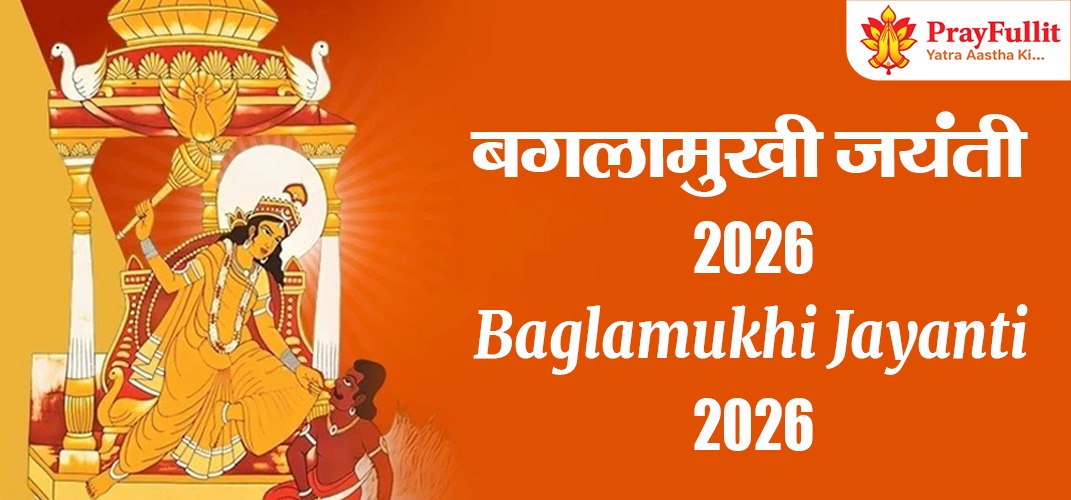
In her iconography, Maa Baglamukhi appears in a radiant golden form, dressed entirely in yellow, seated on a golden throne surrounded by a lake of turmeric water. With one hand she firmly grips the tongue of a demon enemy, and with the other she raises a golden mace. This iconic image represents her power of Stambhana — the ability to immobilise destructive forces before they can cause harm.
She is also known as Brahmastra Vidya — the ultimate divine weapon of creation itself. Devotees seek her blessings to defeat enemies, win court cases, silence those who spread false rumours, break free from black magic, and — most deeply — to conquer their own impulses, anger, and ego. Because Maa Baglamukhi understands that the inner enemy is often the most dangerous of all.
Maa Baglamukhi is the 8th Mahavidya among the ten cosmic wisdom goddesses. She belongs to the Shri Kula and is closely associated with the Shri Kurma incarnation of Lord Vishnu. Her five sacred mantras are Badvamukhi, Jatavedamukhi, Ulkamukhi, Jalamukhi, and Brihad-Bhanumukhi.
Baglamukhi Jayanti 2026 — Date and Shubh Muhurat
Baglamukhi Jayanti 2026 date is Friday, 24 April 2026. The festival is observed on the Ashtami Tithi (eighth lunar day) of the Shukla Paksha (bright fortnight) in the month of Vaishakha, according to the Hindu lunisolar calendar.
Here are the exact timings for 2026:
• Ashtami Tithi Begins: 08:49 PM on April 23, 2026
• Ashtami Tithi Ends: 07:21 PM on April 24, 2026
• Main Celebration Day (Udaya Tithi): Friday, 24 April 2026
• Sacred Colour: Yellow (Pitambari)
• Best Offering: Chana Dal, Turmeric, Yellow Flowers
For those asking about past and upcoming dates, here is a quick reference:
• Baglamukhi Jayanti 2024 Date: 16 May 2024, Thursday
• Baglamukhi Jayanti 2025 Date: 6 May 2025, Tuesday
• Baglamukhi Jayanti 2026 Date: 24 April 2026, Friday
The festival shifts each year because it follows the Hindu lunar calendar. It always falls on Vaishakha Shukla Ashtami, which places it in late April or early May on the Gregorian calendar.
The Mythology Behind Baglamukhi Jayanti
Every great festival has a story behind it — and the story of Maa Baglamukhi's appearance is both ancient and awe-inspiring.
According to the Puranas, a time came when a catastrophic storm arose that threatened to destroy all of creation. The forces of chaos were unleashed, and the devas — the divine beings — were helpless before them. In desperation, they turned to Lord Vishnu. Moved by their prayers and the suffering of all living beings, Lord Vishnu entered into deep meditation at the banks of the Haridra Sarovar — a sacred golden lake of turmeric water in the forests of Saurashtra.
Pleased by his profound devotion, Maa Baglamukhi emerged from the golden turmeric waters of Haridra Sarovar on the auspicious Ashtami Tithi of the Vaishakha month. The moment she appeared, she used her transcendent power of Stambhana to instantly still the cosmic storm and restore harmony to all of creation. It is this divine appearance that we celebrate every year as Baglamukhi Jayanti.
There is another equally powerful legend. A demon named Madan was terrorising the universe through the sheer destructive force of his speech — his words carried the energy of devastation itself. Maa Baglamukhi intervened swiftly. She seized his tongue and rendered him completely powerless. In that single act lies a profound teaching: when negativity is silenced at its root, its power dissolves entirely. Speech and thought are the root of all action — and Maa Baglamukhi is the goddess who rules over both.
Baglamukhi Jayanti Puja Vidhi — Step by Step
Performing the puja with the correct vidhi on Baglamukhi Jayanti 2026 multiplies the blessings many times over. Here is the complete step-by-step ritual procedure:
Step 1 — Sankalp at Brahma Muhurta
Wake up before sunrise, ideally between 4 AM and 5 AM. Take a purifying bath and sit in a clean, quiet space. Take a Sankalp — a clear, heartfelt divine resolve — and mentally state your intention for worship. This sets the spiritual direction for everything that follows.
Step 2 — Wear Yellow and Prepare the Altar
Maa Baglamukhi is Pitambari — deeply and inseparably connected to the colour yellow. Wear yellow clothes throughout the day. Decorate your puja space with yellow fabric, marigold flowers, and fresh turmeric paste. Place the picture or idol of Maa Baglamukhi on a clean, elevated surface. If you have a Baglamukhi Yantra, install it here. Light a pure ghee diya to purify the space.
Step 3 — Panch Upachara Puja
Offer the five sacred items of worship: Gandha (sandalwood paste), yellow flowers, Dhoop (incense sticks), Deepa (ghee lamp), and Naivedya — the sacred food offering. For Naivedya, prepare Chana Dal halwa or yellow sweets. These are Maa Baglamukhi's beloved offerings.
Step 4 — Chant the Baglamukhi Mantra
This is the heart of the puja. Chant the Baglamukhi Mool Mantra a minimum of 108 times using a Haldi (turmeric) mala. Focus deeply on Maa's golden form. Hold a surrendered, pure intention — the quality of your consciousness directly amplifies the power of the mantra.
Step 5 — Stotra and Aarti
Recite the Baglamukhi Stotra, followed by the Aarti. Perform the Aarti with a ghee lamp, moving it in a steady clockwise circle before the goddess. This is a beautiful act of surrender and gratitude.
Step 6 — Havan (Highly Recommended)
If possible, perform a small Havan by offering Chana Dal into the sacred fire while chanting the mantra with each oblation. This is especially powerful for those facing legal disputes, court cases, or enemy-related troubles. The fire carries your prayers directly to the goddess.
Step 7 — Dana and Charity
The puja is incomplete without Dana. Donate yellow items — yellow cloth, turmeric, Chana Dal, mustard oil — to a brahmin, temple priest, or a person in need. This act of generosity activates the karmic cycle of blessings and brings the full circle of the puja to completion.
Baglamukhi Mantras to Chant on Jayanti
Mantra is the living heartbeat of any Baglamukhi sadhana. These are the two most powerful mantras to chant on Baglamukhi Jayanti 2026:
The Baglamukhi Mool Mantra
OM Hleem Baglamukhi Sarvadushtanam Vacham Mukham Padam Stambhay Jihvam Keelay Buddhim Vinashay Hleem Om Swaha
ॐ ह्लीं बगलामुखी सर्वदुष्टानां वाचं मुखं पदं स्तम्भय जिह्वां कीलय बुद्धिं विनाशय ह्लीं ॐ स्वाहा ॥
This is the most potent mantra of Maa Baglamukhi. It calls upon her to paralyze the speech, movement, and intellect of all enemies and destructive forces. Chant this 108 times on Jayanti for powerful results. For deeper sadhana, 1008 repetitions. This mantra is especially effective for those dealing with legal battles, slander, and hidden enemies.
The Baglamukhi Gayatri Mantra
Om Bagalamukhi Ae Cha Vidmahe Stambhinyai Cha Dhimahi Tanno Bangla Prachodayat
ॐ बगलामुख्यै च विद्महे स्तम्भिन्यै च धीमहि तन्नो बंगला प्रचोदयात् ॥
The Gayatri Mantra of Maa Baglamukhi invokes her power of Stambhana — the immobilisation of destructive forces — and asks for her clear divine vision to guide the devotee. This mantra is excellent for daily chanting as well.
Important: Always chant with a focused, clear, and surrendered mind. Avoid negative intentions entirely — the mantra's power follows the quality of consciousness behind it. Misuse of Baglamukhi mantras carries severe karmic consequences.
Baglamukhi Jayanti Upay — Powerful Remedies
These are the most powerful and widely practised Baglamukhi Jayanti upay — spiritual remedies for protection, victory, and the removal of life's deepest obstacles:
1. Yellow in Everything
Wear yellow clothes, offer yellow marigold flowers, and use turmeric generously in your puja. Yellow is not just a colour here — it is the direct energetic signature of Maa Baglamukhi. Surrounding yourself with yellow on this day aligns your entire field of energy with her blessings.
2. Chana Dal Offering
Offer Chana Dal (split chickpeas) mixed with jaggery to the goddess and distribute it as prasad to others. Among all offerings to Maa Baglamukhi, Chana Dal is considered the most sacred and is one of the most effective upay for clearing karmic blockages and removing obstacles from your path.
3. Upay for Court Cases and Legal Battles
Perform a Baglamukhi Havan on Jayanti, chanting the Mool Mantra 108 times for each oblation into the sacred fire. After the havan, tie a yellow thread with a turmeric knot around your right wrist. This acts as a powerful protective kavach that deflects negative energies and brings clarity and victory in legal matters.
4. Upay to Stop Slander and Silence Enemies
Write the full name of the person causing harm on a piece of yellow paper. Place this paper under the Baglamukhi Yantra on your altar. Chant the Mool Mantra 108 times with clear, focused intention. This is one of the traditional Stambhan upay — it works to still the destructive speech and actions of your adversaries at their root.
5. Night Sadhana on Jayanti
After sunset on Jayanti, light 8 ghee lamps — one for each of the first eight Mahavidyas, with the eighth lamp as the focal point for Maa Baglamukhi. Sit in meditation and chant her Mool Mantra in the quiet of midnight. This is one of the most potent upay available on this sacred night.
6. Dana — Charity as Completion
No upay is complete without Dana. On Jayanti, donate yellow items — cloth, turmeric, Chana Dal, mustard oil, and yellow sweets — to a brahmin, a temple priest, or someone in genuine need. Charity on this day activates the full karmic cycle and unlocks the goddess's blessings.
7. Regular Thursday Practice
Even outside of Jayanti, make every Thursday your weekly Baglamukhi sadhana day. Chant her Mool Mantra 108 times every Thursday morning, preferably after a bath and before eating. Over time, this builds a powerful, continuous protective shield around you and your family.
Baglamukhi Puja at Night — Rules and Significance
Can we do Baglamukhi puja at night? This is one of the most common questions asked about Maa Baglamukhi's worship — and the answer is a clear yes. In fact, night puja for Maa Baglamukhi is not merely permitted. It is actively encouraged in the Tantric tradition.
Maa Baglamukhi is a Tantric Mahavidya, and Tantric worship has always been associated with the night. The Nishitha Kala — the period around midnight — is considered the most sacred window for her worship. During this time, the world grows still, the mind becomes quieter, and the goddess's golden energy is considered most accessible to sincere devotees.
The ideal time window for Baglamukhi puja at night is between 11 PM and 2 AM. This is particularly potent for Stambhan sadhana, Shatru-nashak worship, and mantra repetition for those seeking protection from enemies, resolution of court cases, or removal of black magic.
However, a few rules must always be observed:
• Perform night puja only with pure, protective intention. Never approach Maa Baglamukhi with the desire to harm another person — the karmic consequences are severe and irreversible.
• Maintain physical and mental purity before sitting for night sadhana.
• For advanced Tantric night sadhana, always seek the guidance of a qualified and initiated guru. Incorrect practice can create serious imbalances.
• Keep the puja space clean and free of disturbance. Silence is the ideal condition for this worship.
Maa Baglamukhi Day in Navratri — What You Need to Know
Many devotees ask: which day of Navratri is dedicated to Maa Baglamukhi? This is an important question, and it deserves a clear answer.
Maa Baglamukhi belongs to the Dus Mahavidyas — the ten cosmic wisdom goddesses of the Shakta tradition. She is not among the nine Navadurga forms that are worshipped during Navratri. These are two separate systems of goddess worship within Hinduism.
However, in many Tantric lineages and traditions, Maa Baglamukhi receives special reverence on the Ashtami night of Navratri. This connection is meaningful: Ashtami is the 8th night of Navratri, and Baglamukhi is the 8th Mahavidya. The number 8 links them in the Tantric numerological tradition.
Additionally, some Shakta practitioners worship all ten Mahavidyas together on the Navami night (9th night) of Navratri, as part of an extended Mahavidya worship cycle. In this context, Baglamukhi takes her rightful place alongside Kali, Tara, Tripura Sundari, and the others.
But to be completely clear: Maa Baglamukhi's dedicated annual Jayanti is Vaishakha Shukla Ashtami — which in 2026 falls on Friday, 24 April. This is a separate and distinct festival from Navratri, celebrated in the month of Vaishakha (April–May) every year.
Famous Bagalamukhi Devi Temples in India
Visiting a Bagalamukhi Devi temple on Jayanti is one of the most powerful acts of devotion a devotee can perform. The collective energy of hundreds or thousands of worshippers at a sacred Siddhapeeth on this day is said to multiply the blessings exponentially. Here are the most sacred Bagalamukhi temples in India:
Pitambara Peeth, Datia — Madhya Pradesh
This is the most revered and celebrated Siddhapeeth of Maa Baglamukhi in all of India. Located in Datia, Madhya Pradesh, the Pitambara Peeth is home to both Maa Baglamukhi and Maa Dhumavati, making it one of the most powerful tantric energy centres in the country. On Baglamukhi Jayanti, tens of thousands of devotees make the pilgrimage here. The atmosphere of continuous mantra chanting, havan smoke, and marigold flowers is extraordinary.
Baglamukhi Temple, Kangra — Himachal Pradesh
Nestled in the beautiful Dhauladhar foothills of Himachal Pradesh, the Kangra Baglamukhi temple is a highly energised shrine especially popular among those seeking protection from enemies and success in competitive examinations. The natural surroundings amplify the Tantric energy of this temple, making it a favourite destination for sadhaks from across northern India.
Baglamukhi Mandir, Nalkheda — Madhya Pradesh
The Nalkheda temple in Madhya Pradesh is one of the major centres for Baglamukhi Tantric practices in India. This temple is renowned for granting victory in all forms of adversarial situations — legal battles, business disputes, and personal conflicts. The presiding deity here is considered especially responsive to sincere worship.
Baglamukhi Temple, Bankhandi — Himachal Pradesh
Located in the serene Palampur region of Himachal Pradesh, the Bankhandi temple is known for its peaceful atmosphere and its powerful Jayanti celebrations. The temple regularly hosts continuous mantra yagnas on auspicious tithis and draws a devoted local following as well as pilgrims from across the state.
Baglamukhi Temple, Nagpur — Maharashtra
One of the most prominent Baglamukhi temples in western India, the Nagpur temple regularly hosts large-scale Jayanti pujas, community havans, and mantra events. It is a well-established centre of devotion for Maa Baglamukhi in Maharashtra and draws devotees from across the region on her Jayanti.
Do's and Don'ts on Baglamukhi Jayanti 2026
To make the most of Baglamukhi Jayanti 2026 and ensure your worship is both effective and spiritually aligned, keep these guidelines in mind:
Do These on Jayanti
• Observe a fast on Jayanti day — at minimum one meal, or a full Nirjala (waterless) fast for deeper spiritual merit.
• Wear yellow clothes from morning until night and use a yellow seat or mat for your puja and meditation.
• Maintain inner purity throughout the day. Avoid arguments, harsh speech, and anger — these directly disturb the energy of the worship.
• Read or listen to the Baglamukhi Katha (the mythological story of her appearance) as part of the puja.
• Perform charity — donate to the needy, feed cows, and offer seva (service) at a temple. Dana on Jayanti is considered especially auspicious.
Avoid These on Jayanti
• Do not use Baglamukhi mantras or sadhana with the intention of harming another person. The karmic consequences of misusing this sacred energy are severe.
• Avoid non-vegetarian food, alcohol, and any tamasic (heavy, dull) activity on the puja day.
• Do not attempt advanced Tantric sadhana without proper guru initiation. Without the right guidance, incorrect practice can create serious spiritual and physical imbalances.
• Do not perform the puja in a distracted, hurried manner. Maa Baglamukhi responds to sincerity, not speed.
Frequently Asked Questions About Baglamukhi Jayanti 2026
Bagalamukhi Jayanti kab hai — when is it in 2026?
Baglamukhi Jayanti 2026 is on Friday, 24 April 2026. The Ashtami Tithi begins at 08:49 PM on April 23 and ends at 07:21 PM on April 24. The main celebration, as per Udaya Tithi, is on April 24.
Maa Baglamukhi day in week — which day to worship her regularly?
Thursday (Guruvar) is the most auspicious weekly day for Maa Baglamukhi worship. Chanting her Mool Mantra 108 times every Thursday morning builds a steady and powerful spiritual protection around you. Her Jayanti in 2026 falls on a Friday.
Can we do Baglamukhi puja at night?
Yes, absolutely. Baglamukhi is a Tantric Mahavidya and night puja is not only permitted but highly recommended. The Nishitha Kala (around midnight) is the most potent time — particularly between 11 PM and 2 AM. Always maintain purity of intention and ideally seek guru guidance for Tantric night sadhana.
What is Maa Baglamukhi day in Navratri?
Maa Baglamukhi belongs to the Dus Mahavidyas, not the nine Navadurga forms. In Tantric traditions she receives special reverence on Ashtami night of Navratri due to her position as the 8th Mahavidya. Her dedicated annual Jayanti, however, is always Vaishakha Shukla Ashtami — separate from Navratri.
What are the best Baglamukhi Jayanti upay for enemies and legal battles?
Chant the Mool Mantra 108 times, wear yellow clothes, offer Chana Dal and turmeric to the goddess, perform a Baglamukhi Havan, write the adversary's name on yellow paper under the Baglamukhi Yantra while chanting, and tie a turmeric-knot yellow thread on your right wrist as a protective kavach.
What is the most famous Bagalamukhi Devi temple in India?
The most revered is Pitambara Peeth at Datia, Madhya Pradesh. Other highly sacred temples are in Kangra (Himachal Pradesh) and Nalkheda (Madhya Pradesh). A Jayanti pilgrimage to any of these is considered exceptionally powerful and spiritually transformative.
What was the Baglamukhi Jayanti 2025 date?
Baglamukhi Jayanti 2025 was celebrated on Tuesday, 6 May 2025, on the Vaishakha Shukla Ashtami of that year.
Conclusion — Honour Maa Baglamukhi on 24 April 2026
Baglamukhi Jayanti 2026 on Friday, 24 April is more than a date on the calendar. It is a divine opening — a gateway through which the goddess's golden, protective energy flows most freely into the lives of sincere devotees.
Maa Baglamukhi is ultimately the goddess of stillness within chaos. She teaches us that the greatest power is not the power to destroy, but the power to pause — to still the tongue, quiet the mind, and act from clarity rather than reaction. In a world that grows noisier and more combative each day, her energy is not ancient or distant. It is urgently needed, and deeply relevant.
Observe this sacred Jayanti with a clean heart, yellow flowers, sincere mantras, and an act of charity. Whether you visit a Bagalamukhi Devi temple, perform the puja at home, or sit quietly in midnight sadhana — her blessings are available to anyone who comes to her with genuine devotion.
Jai Maa Baglamukhi
May her golden grace protect you, silence all adversity, and fill your life with victory, clarity, and lasting peace.
Published by PrayfulIT.com — Your Trusted Guide to Hindu Festivals, Puja Vidhi and Spiritual Practices